
Growing into adulthood comes with new responsibilities, challenges, and opportunities. While many people think of health as simply eating well or exercising regularly, wellness is much broader than physical health alone. It includes the way we think, feel, connect with others, manage our finances, find purpose, and navigate daily life.
In a recent LifeLaunch conversation, Cameron Conner spoke with Grace Chappell, Youth and Family Liaison for Early Psychosis Care with the Missouri Institute of Mental Health, about the eight dimensions of wellness and why they play such an important role in helping young adults build healthy, independent lives.
What Are the Eight Dimensions of Wellness?
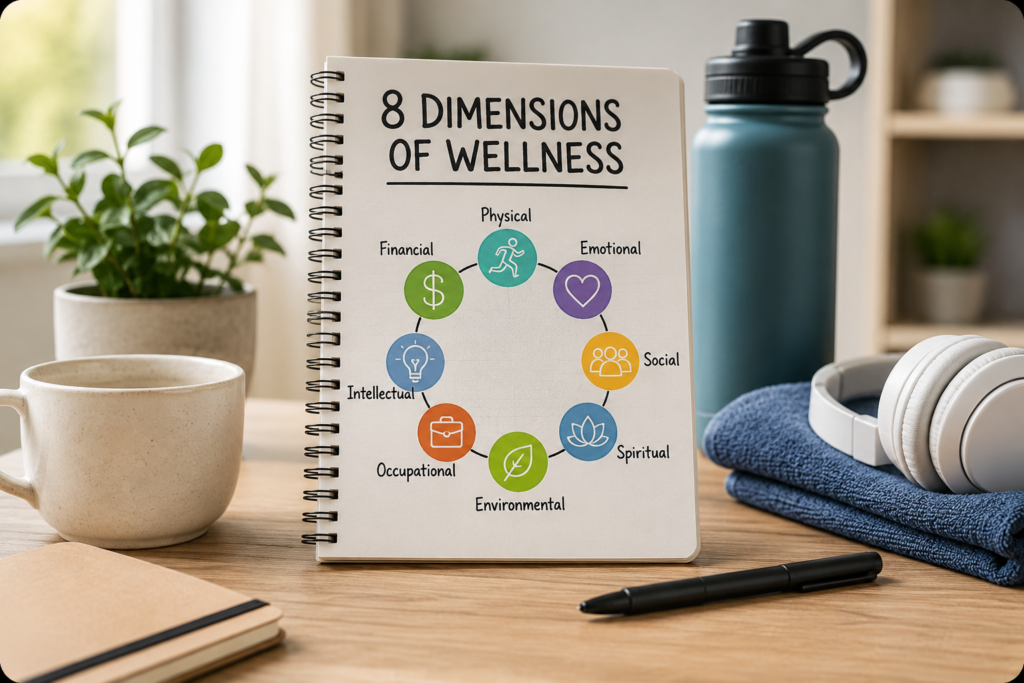
The eight dimensions of wellness provide a framework for understanding the different areas of life that contribute to overall well-being. Rather than focusing on a single aspect of health, this approach recognizes that wellness is made up of several interconnected parts.
The eight dimensions include:
- Physical Wellness
- Intellectual Wellness
- Emotional Wellness
- Spiritual Wellness
- Environmental Wellness
- Financial Wellness
- Occupational Wellness
- Social Wellness
Each dimension represents a different area of life that requires attention and care. Physical wellness includes exercise, nutrition, sleep, and caring for your body. Emotional wellness involves understanding and managing your feelings. Social wellness focuses on building healthy relationships and maintaining meaningful connections with others.
Other dimensions may look different from person to person. Spiritual wellness, for example, can involve religion, meditation, personal values, time in nature, or anything that provides a sense of meaning and purpose. Financial wellness involves managing money responsibly, while occupational wellness focuses on finding satisfaction and balance in work, school, or career goals.
Why Wellness Matters During Young Adulthood
The transition from adolescence to adulthood often comes with greater independence and responsibility. Tasks that were once managed by parents, teachers, or other adults gradually become the responsibility of the individual.
Because of this shift, young adults often find themselves navigating multiple areas of life at once. They may be balancing school, work, friendships, finances, and personal growth while also learning how to care for their physical and emotional health.
Understanding the eight dimensions of wellness can help young adults recognize which areas of their lives are thriving and which areas may need additional attention. Instead of feeling overwhelmed by stress or uncertainty, they can identify the source of the challenge and take practical steps toward improvement.
Start Small and Focus on One Area
One of the most valuable lessons from the conversation is that wellness does not require a complete life makeover overnight.
Rather than trying to improve every dimension at once, it can be helpful to focus on one area at a time. Small, intentional actions often lead to lasting change.
For example, someone focusing on financial wellness might:
- Create a simple monthly budget
- Review spending habits
- Save money toward a specific goal
- Reduce unnecessary purchases
Someone focusing on physical wellness might:
- Take a short walk each day
- Improve sleep habits
- Drink more water
- Add movement into their daily routine
The goal is not perfection. The goal is progress.
How the Dimensions Work Together
An important aspect of the wellness model is recognizing that each dimension is connected to the others.
Financial stress can affect emotional wellness. A demanding job or school schedule can impact physical health. Social isolation can influence emotional well-being, while a lack of purpose or meaning can affect motivation and overall life satisfaction.
When one area experiences significant strain, it often impacts other areas as well. This is why looking at wellness as a whole can be more effective than focusing on a single challenge in isolation.
By paying attention to the bigger picture, young adults can better understand how different aspects of their lives influence one another and where positive changes may have the greatest impact.
Finding Resources and Support
Building wellness is not something people have to do alone. Resources, support systems, and educational tools can help young adults develop the skills they need to thrive.
LifeLaunch offers resources focused on wellness, life skills, personal growth, and stories of hope from individuals who have overcome challenges and built successful paths forward. These resources can help young adults explore different areas of wellness and identify practical strategies that fit their unique situations.
For those who are unsure where to begin, exploring life skills resources can be an excellent first step toward building confidence and independence.
Moving Forward One Step at a Time
The eight dimensions of wellness remind us that a healthy life is about more than physical health alone. True wellness involves creating balance across multiple areas of life and recognizing that growth happens gradually.
Young adulthood is a time of learning, discovery, and change. By understanding the different dimensions of wellness and taking small, intentional steps toward improvement, young adults can build a stronger foundation for long-term health, happiness, and success.
You do not need to have everything figured out today. Start with one area, take one step forward, and continue building from there.