
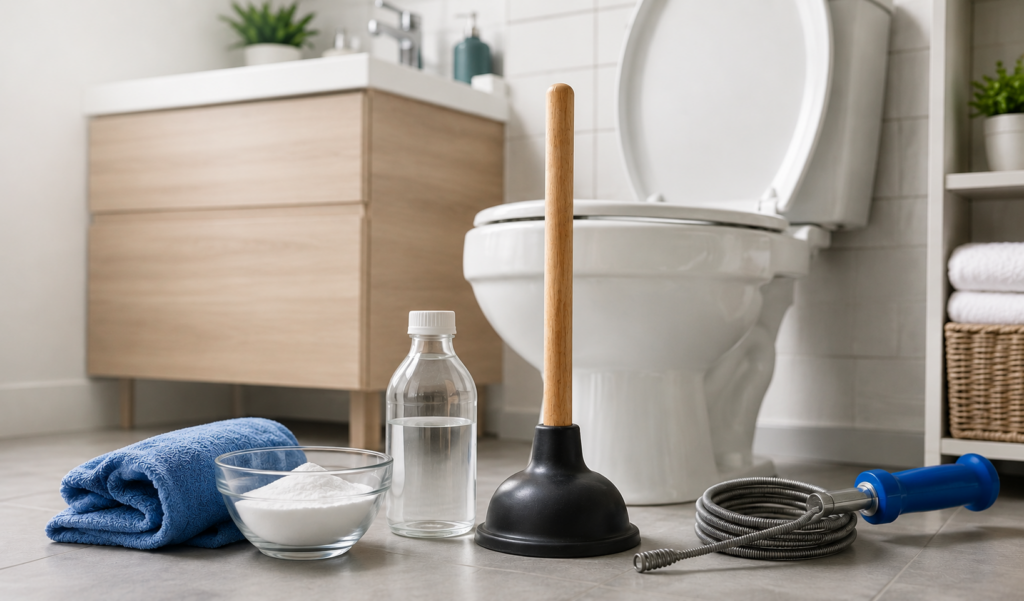
Clogged toilets and drains are common issues faced by many young adults. And while it might feel like a total disaster in the moment, unclogging something is way more doable than it looks (and won’t take your whole afternoon). This guide provides essential steps for addressing these problems effectively, eliminating the need to involve parents or call a plumber. With a few simple techniques, anyone can tackle the challenge of unclogging bathroom fixtures. You don’t need fancy tools—just a little patience and the right strategy. Whether it’s a minor blockage or a more stubborn issue, the following instructions are easy to follow and require minimal tools.
Battling the Toilet Clog
Let’s start with the most dreaded clog of all – the toilet. It’s gross, sure—but you’ve got this. You’ll feel like a home-repair hero when it’s done. Before you panic, take a deep breath and follow these steps:
- Assess the situation: If the water level is high, wait a bit for it to go down. If it doesn’t, you might need to remove some water manually (using a cup or bucket) to prevent overflow. Pro tip: Lay down some old towels or paper towels around the base—just in case.
- Grab a plunger: Make sure you’re using a flange plunger, which has an extended rubber lip that fits snugly in the toilet bowl. If all you’ve got is the flat sink kind, it’ll still work—just not as well. Position it to create a seal around the drain hole.
- Plunge like a pro: Push down firmly, then pull up quickly to create suction. Repeat this motion vigorously about 15-20 times. If it takes longer, don’t stress—it’s normal for stubborn clogs to take a few rounds. The clog should clear with a satisfying gurgle.
- If plunging fails: Try using a toilet auger (also called a plumbing snake). It sounds intense, but it’s just a flexible coil you twist into the pipe. Insert the auger into the bowl and crank the handle to navigate the pipe until you feel resistance. Then, crank and pull back to break up the clog.
Sink and Shower Drain Dilemmas
Slow-draining sinks and showers can be a pain. The good news? Most clogs here are caused by hair, soap, or toothpaste sludge—not major plumbing disasters. Here’s how to tackle them:
- Remove visible debris: For sinks, take out the stopper and clean off any hair or gunk. For showers, remove the drain cover and do the same.
- Try boiling water: Pour a pot of boiling water directly into the drain. This can often melt and dislodge minor clogs caused by soap scum or grease. Just be careful not to splash—especially if you have a shallow basin.
- Use a plunger: Yes, plungers work on sinks and showers too! Bonus tip: Coat the rim of the plunger with a little petroleum jelly to improve suction. For sinks, seal the overflow hole with a wet cloth before plunging. For showers, remove the drain cover and plunge away.
- Baking soda and vinegar magic: Pour 1/2 cup of baking soda down the drain, followed by 1/2 cup of white vinegar. Cover the drain and let it fizz for about 15 minutes. You’ll hear bubbling—chemistry is doing its thing in your drain, just like a baking soda volcano. Then flush with hot water.
- Snake it out: If all else fails, use a drain snake. Feed it into the drain until you feel resistance, then twist and pull back to break up the clog. You can find cheap ones online or in the hardware aisle—some even have handles shaped like dinosaurs.
Conclusion
Dealing with clogs is part of adulting, but it doesn’t have to be a nightmare. And after you’ve done it once, you’ll be way less intimidated the next time. Remember, prevention is key – avoid flushing anything other than toilet paper, and use drain catchers in your sink and shower. If you’ve tried everything and still can’t clear the clog, it might be time to call in a professional. There’s no shame in asking for backup—plumbers exist for a reason. But hey, at least now you can say you gave it your best shot! Honestly? You probably handled it better than most adults would.